If you’ve stumbled on this site, the content here has been moved over to the main Echoes website at www.echoes.org, and more recent posts can be found there.
John Diliberto’s articles, as had been seen in this blog, can be found in the Reviews and Commentary category there.
World Fusion, Dream Pop and Ambient Americana in Echoes Top 25 for May
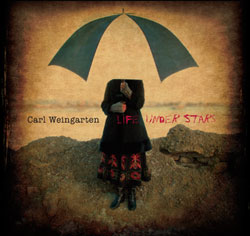
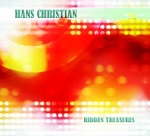
The Echoes Top 25 for May continues a trend towards chilled out vocal music but the top three slots are held by three CD of the Month picks, one vocal, two instrumental. Lyla Foy is a relatively new artist who used to record as Wall. Her Mirrors the Sky album, the first under her own name, was a CD of the Month in March. But surrounding her are two veteran Echoes artists, one of who goes back even further than the show. Carl Weingarten’s beautiful chamber Americana journey, Life Under Stars is our current CD of the Month in June. And leading the pack is Hans Christian’sHidden Treasures, our May CD of the Month selection, an album of cross-cultural ecstasy. You can read about all of those and hear tracks by following the links above.
Newcomers to the Echoes Top 25 include Stumbeleine, 9Bach, Phox, Hauschka, Ben Cosgrove and Michael Barry-Rec. Here’s thecomplete list.
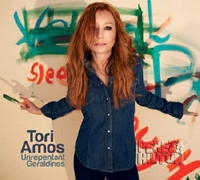
Since we had Tori Amos on the air live two weeks ago, she’s enjoyed some of the greatest acclaim of her career. Her new CD, Unrepentant Geraldine went into Billboard’s Top 200 and the singer has garnered some of her best reviews in years. You can hear her talk about it all tonight on Echoes.
Tori Amos is an icon among singer-songwriters. Her 1992 solo debut, Little Earthquakes still resonates more than 22 years later and now that she’s hit 50, Amos is showing no signs of mellowing in a music that is as politically and socially charged and as musically adventurous as ever. Two weeks ago she released Unrepentant Geraldines, an album that modulates concepts of aging, sexism, religion and love, although that might sometimes be hate.
Two weeks ago, I sat down with Amos in the bowls of Manhattan, literally. We were in Subculture, a new performance space in the basement of a 117 year old building. The venue is settled in industrial art decor, with massive exposed support pillars with bolts the size of my calves and the rumble of New York’s subway seemingly a few inches under my feet. Listen close and you can hear their growl.
After performing an exclusive live set for us, which you can hear at Echoes On-Line, Tori sat down to talk about Unrepentant Geraldines, religion, myths and turning 50.
WHERE & HOW TO LISTEN TO ECHOES
Echoes is on different stations, on different days and different times.
Join the Echoes CD of the Month Club. and get Carl Weingarten’s Life Under Stars, the June CD of the Month. You’ll get great CDs and help support Echoes at the same time. You can do it all right here.
Join us on Facebookwhere you’ll get all the Echoes news so you won’t be left behind whenDead Can Danceappear on the show, Tangerine Dream tours or Brian Eno drops a new iPad album. Or Follow us on Twitter@echoesradio.
Now you can go Mobile with Echoes On-Line. Find out how you can listen to Echoes 24/7 wherever you are on your iPhone, iPad or Droid.
An Echoes Favorite Evokes Windham Hill, Miles Davis and Ry Cooder in a Pastoral Americana Journey
Hear it tonight on Echoes
I don’t know why I’m surprised that Carl Weingarten has made an album of such sweet simplicity and pastoral bliss. I shouldn’t be. Over the course of more than three decades this musician has taken so many twists and turns in his music that the only surprise would be if he repeated himself. I first heard of him in the early 1980s with the St. Louis progressive rock group Delay Tactics. That was followed by his ambient period reflecting the influence of Robert Fripp and Brian Eno. His move to San Francisco brought more acoustic elements into his music as he became a devotee of the dobro, a resonator guitar that he deployed on Redwood Melodies: A Traveler’s Companion. The Bay Area’s vibrant world music scene also had an impact on albums like Blue Faith.
He brings many of these elements together on Life Under Stars, creating an album that’s like a ride through the countryside, with landscapes changing around every corner. You can smell the fresh air on the opening track, “I Remember Summer,” a wistful trek down a backwoods lane with Robert M. Powell’s yearning pedal steel guitar buoyed by the liquid flow of Michael Manring’s electric bass and some high plains piano from Kit Walker.
The album shifts between these Windham Hill like reveries to more spacey night sky excursions like “A Different Rain” and “Sundial.” The former track harkens back to his 1980s music, built around delays and loops of Weingarten’s electric guitar. Playing mostly solo, he creates a guitar chamber ensemble articulating a perfect, circular balance, like a Zen garden, but without using any Asian modes or instruments. “Sundial” is a free-float of dew-glistened sustained electric guitar suspended over a cycling acoustic guitar motif.
Ever since he picked up the dobro, Americana has been an important part of Weingarten’s sound, and it suffuses Life Under Stars, especially on tracks like “Western Overnight.” Once again Powell’s pedal steel calls down from a prairie heaven, casting a chrome glow over Weingarten’s rustic guitar and dobro.
Western Overnight
Carl Weingarten Live in Echoes Living Room
Michael Manring, Weingarten’s longtime associate, is all over the album, lending his deep rubbery bass lines to Weingarten’s compositions. He’s like a wise soul both anchoring and propelling Weingarten’s airy flights. Both musicians have been playing in a trio with trumpeter Jeff Oster over the last few years and you can hear a hint of that in the electric-Miles Davis inflections on “Nightwalk. ” It echoes In A Silent Way, with Celso Alberti’s brush stroked train groove and Troy Arnett’s piano-in-space mood laying the starfield for Oster’s muted trumpet melodies and Weingarten’s electric slide guitar.
Nightwalk
Only “Code Blue,” with its funky groove and Weingarten’s distorted blues guitar licks, sounds out of place. I guess it’s the roadside bar on Weingarten’s travelogue.
Weingarten’s compositions are so beautifully arranged it’s easy to forget that his guitar is the center of the album, sometimes a gentle, acoustic ramble; other times a celestial siren or a wild electric slide. A lot of musicians make albums inspired by nature, cross-country journeys and celestial reflections. Most of them are insipid. Carl Weingarten’s Life Under Stars is sublime. It’s a defining album for this underrated musician.
Join the Echoes CD of the Month Club. and get Carl Weingarten’s Life Under Stars, the June CD of the Month. You’ll get great CDs and help support Echoes at the same time. You can do it all right here.
Join us on Facebookwhere you’ll get all the Echoes news so you won’t be left behind whenDead Can Danceappear on the show, Tangerine Dream tours or Brian Eno drops a new iPad album. Or Follow us on Twitter@echoesradio.
Now you can go Mobile with Echoes On-Line. Find out how you can listen to Echoes 24/7 wherever you are on your iPhone, iPad or Droid.
Tonight Sky remains one of my favorite and most curiously neglected albums of the last year. Hear why you should love this music tonight on Echoes.
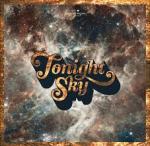
Jason Holstrom has been on the Seattle music since the turn of the millennium playing in groups like Wonderful and United States of Electronica. But none of that music would prepare you for the serenely feel good vibrations of his project,Tonight Sky. He’s taken Beach Boys harmonies and sent them into electronica space. In Seattle, I surf the music ofTonight Skywith Jason Holstrom tonight on Echoes.
Tell me that this song doesn’t just make you feel good.
Echoes is on different stations, on different days and different times.
You can listen locally or stream-live from our many stations’ websites.
You can also stream it on-demand from Echoes On-line, our streaming subscription service. You can sign up for a 1 week trial of unlimited streaming for $2.99 here.
Join the Echoes CD of the Month Club. and get Hans Christian’s Hidden Treasures, the May CD of the Month. You’ll get great CDs and help support Echoes at the same time. You can do it all right here.
Join us on Facebookwhere you’ll get all the Echoes news so you won’t be left behind whenDead Can Danceappear on the show, Tangerine Dream tours or Brian Eno drops a new iPad album. Or Follow us on Twitter@echoesradio.
Now you can go Mobile with Echoes On-Line. Find out how you can listen to Echoes 24/7 wherever you are on your iPhone, iPad or Droid.
Hear Singer-Songwriter Juliette Commagere Talking About her Dream Pop on Echoes
Juliette Commagere on Echoes
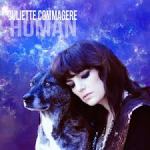
I’ve been enchanted by the voice of Juliette Commagere since I heard her singing on a Ry Cooder record, Chavez Ravine. Then came “Gold,” the track she sang on Love on A Real Train’s debut last year was one of our favorite cuts. Juliette recently released her third solo album, Human. It’s a beautiful and introspective electronic song cycle. Today, Juliette Commagere talks about her musical family and songs on the dark side.
Echoes is on different stations, on different days and different times.
You can listen locally or stream-live from our many stations’ websites.
You can also stream it on-demand from Echoes On-line, our streaming subscription service. You can sign up for a 1 week trial of unlimited streaming for $2.99 here.
Join the Echoes CD of the Month Club. and get Hans Christian’s Hidden Treasures, the May CD of the Month. You’ll get great CDs and help support Echoes at the same time. You can do it all right here.
Join us on Facebookwhere you’ll get all the Echoes news so you won’t be left behind whenDead Can Danceappear on the show, Tangerine Dream tours or Brian Eno drops a new iPad album. Or Follow us on Twitter@echoesradio.
Now you can go Mobile with Echoes On-Line. Find out how you can listen to Echoes 24/7 wherever you are on your iPhone, iPad or Droid.
Moby says that Silver Apples were the first electronic pop group and that’s probably true. In 1968, electronic instruments were still exotic. There was the occasional use of the Theremin with The Beach Boys and Lothar and the Hand People. Beaver & Krause had used the Moog in 1967 on Ragnarok having previously released the more academic Nonesuch Guide to Electronic Music that same year. But it was Silver Apples who plugged electronics into the psychedelic experience and went on stage with no guitars or bass, just drums, electronics, voice and occasionally recorder and banjo. You can hear the story of this remarkable band tonight on Echoes.
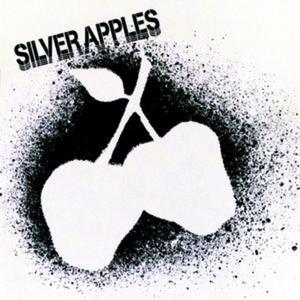
Often when we produce interview features on Echoes, a lot of great material gets left on the floor due time constraints or because they are extraneous to the central story. That’s the case with our interview with Simeon Coxe of Silver Apples. You can hear all about this pioneering electronic pop group on Echoes, but in brief, Silver Apples formed in 1967 and released their eponymous debut in 1968. They had no synthesizers or electronic keyboards, just Danny Taylor on drums and Simeon on audio oscillators controlled by telegraph switches, buttons and knobs. They were right in the center of the psychedelic 60s, opening for many of the major acts at the time and jamming with Jimi Hendrix. Many of Simeon’s stories were too long to make the feature or didn’t fit the narrative. But I want to share them with you here. Their iconic album cover was actually designed by the band:
Simeon Coxe: Yeah, we cut out a silhouette of two apples, me and Danny, and a leaf, just figured, I don’t know, apples have leaves. And made a stencil out of it and sprayed our entire hallways with it with black ink and a toothbrush. And the record label came in and photographed that and chose one of them for the record.
Simeon says that the band broke up after they were sued by Pan American Airlines over the cover of their second album, Contact:
Simeon Coxe: Our second record was called Contact. I named it Contactjust because of the double entendre in the word. And the fact that old timey airplane pilots used to have someone actually crank their propellers to start the airplanes and they would yell contact, which is to make electric contact. And we thought this electric contact and the spinning of the propeller and all that was fine. So we wanted to do it in an airplane cockpit, and the advertising agency that had Kapp Records also had Pan Am, so it was easy for them to get them to park an airplane facing the sunset, and have us sit in the pilot’s seat while they vacuumed out the rest of the airplane and shoot that shot. So naturally, Danny and I smuggled in some pills and pot, you know, joints to hang out on the dashboard, stuff like that. And then to take it even further, we found a cover of an airplane crash on the back that we used on the back and super imposed me and Danny just sitting among the wreckage there, just you know, dumb hippies.
And…everybody approved it. I mean you don’t put an album out internationally and not have it go through all the steps of being approved. And it was approved by Pan Am, approved by the record label, approved by the advertising agency. And by the time it got on the shelves, some executive at Pan Am who hadn’t signed on an approval but who had had power, just freaked out and just you know, hit the fan. They, Pan Am sued us personally, sued the record label, got an injunction from a judge to have all the records pulled off of the shelves nationally. Got us forbidden to play the music that’s on that record, so we couldn’t promote it. And as a matter of fact, they went so far as to in the city of New York, get the judge to allow them to confiscate our equipment to make sure we weren’t gonna play that music. So one time when we were playing at Max’s Kansas City, fire marshals came in and taped the stage so that our stuff would be there when their equipment guy got there, and we managed when they weren’t looking, we managed to sneak my oscillators and stuff out the back door, but by the time we got back, they got Danny’s drums. So we were out of business. No record, no record label and no equipment.
They didn’t collect from me. Danny and I went into hiding. We both got hotel rooms and just kinda went into hiding. I worked as a DJ in a nightclub for a while and I think Danny did some session work in recording studios under a different name, and we just kinda laid low. Then eventually we just said, you know, Silver Apples is never coming back, it’s just not going to be possible, we better just go our own ways for a while and see what happens.
So Pan Am, I guess you could say they successfully shut us down, but actually Silver Apples is still in business. I don’t think you’ll find a PanAm airplane anyway, so we survived, from my point of view.
Simeon says that Silver Apples jammed with Jimi Hendrix and actually recorded a version of “The Star Spangled Banner” with him.
Silver Apples’ Simeon @ MOEMS Photo: Diliberto
Simeon Coxe: Yeah, well he and Danny were friends. Danny played drums in his first band. His first band was something called Jimi James and the Blue Flames. And they worked as a house band all through the village, just a straight blues band. And the drummer was apparently very unreliable; he’d get drunk and get lost or something. He wouldn’t show up for days, sometimes weeks. One time he went to detox and just stayed there for months. And Jimi would call Danny and Danny would come drum with him. And so when Hendrix got the opportunity to go to England and try and make something bigger for himself because he didn’t feel like it was happening in the states, but a bunch of the British musicians were saying we could make it happen, he begged Danny to come with him. He didn’t wanna go by himself and just be there with, you know, have to pick up musicians. He ended up with a pretty good group, but fortunately, Danny didn’t wanna go to Britain. He just didn’t want to go and he said you know, there’s plenty of musicians around here I can work with. And so I got him.
Silver Apples Oscillatiors Today
And so whenever Hendrix would come back into town, he’d look Danny up and see what he was doing, and so he came around the record plant. We both were booked in the record plant simultaneously one time for months for doing our third records. And so he’d come in and jam and we’d find, we’d find out what he was doing in his studio and jam. A lot of times we were using the same studio, his amps would be parked all around my amps. And so we’d just, you know, when the time came, I’d leave and he’d come in, or many times it would overlap. He would come in and sit around and drink a beer while Danny and I were working on stuff. One time Danny and I were working on our version of “The Star Spangled Banner,” which we were gonna do at a festival in, on the 4th of July in the park in NY. We were gonna play “The Star Spangled Banner” with my oscillators. We thought that would be a howl; if the CIA didn’t put us in jail, it would be great. And Hendrix came in and he heard us playing it. And he said damn, I’m working on the same thing…I’m supposed to play an outdoor concert in a couple of months and I’m supposed to play at dawn, and I thought it would be funny to play the national anthem to make those kids all stand up and wake up, you know, before, at the crack of dawn. [He was actually scheduled to play at night and close the festival, but rain delays pushed him into the morning.]
Simeon Coxe
And so we got to talking about it and he was listening to how we were doing it, and he was playing along with how he was doing it. And Ed Kramer, who’s the engineer, had the good sense to roll the tapes. And so we do have that. We the version that was given to Danny, a two track mix down that was given to Danny to take home to see how he could add drums to it…all kinds of cymbal crashes for the war sounds and stuff. And it just never happened, but we did find the tape of me on bass oscillators and Hendrix on guitar playing “The Star Spangled Banner. ” We found it in Danny’s attic when Danny and I hooked up again in the ‘90s. And so that’s been since released on a disk called Selections, which is like a best of. It has about 12 cuts from the first two albums and then as a bonus track, as a hidden track it’s the Hendrix session.
This video is ostensibly that recording, however, to my ears it sounds like the studio version from Hendrix’s Rainbow Bridge.
Finally, Simeon claims he never called his instrument The Simeon.
Simeon Coxe: Well, The Simeon, but I would never have done that. That’s embarrassing to me to this day. That was one of those record label things to try and promote something that really didn’t exist. There was nothing that was The Simeon. It changed every day. Something broke and had to be replaced every day, or Danny or I would have a new idea, something that we added or subtracted to it. It never was the same. There was no way it could ever be manufactured or marketed in any way, but they had to do that as I was just kinda stuck with it.
I told him he should own it.
This is the stuff that was left out. Hear what was left in with Silver Apples tonight on Echoes.
Echoesis on different stations, on different days and different times.
You can listen locally or stream-live from our many stations’ websites.
You can also stream it on-demand from Echoes On-line, our streaming subscription service. You can sign up for a 1 week trial of unlimited streaming for $2.99 here.
Join the Echoes CD of the Month Club. and get Hans Christian’s Hidden Treasures, the May CD of the Month. You’ll get great CDs and help support Echoes at the same time. You can do it all right here.
Join us on Facebookwhere you’ll get all the Echoes news so you won’t be left behind whenDead Can Danceappear on the show, Tangerine Dream tours or Brian Eno drops a new iPad album. Or Follow us on Twitter@echoesradio.
Now you can go Mobile with Echoes On-Line. Find out how you can listen to Echoes 24/7 wherever you are on your iPhone, iPad or Droid.
The Canadian-Swedish Band Thus Owls Talk about Turning Rocks on Echoes Podcast.
Thus Owls Parker Shper, Simon Angell, Erika Angell live on Echoes
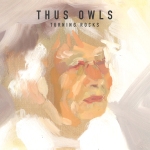
Thus Owls’Erika Angell is a singer who isn’t afraid to cut loose. Like Kate Bush and Tori Amos, she takes unexpected vocal flights, but unlike them, her voice is throatier, earthier giving her vocal turns a depth of knowing. She can exude the declamatory sound of Siouxsie Sioux and the poignant refrains of Joni Mitchell. It’s the perfect voice for a band that brings a theatrical feel to Turning Rocks, their song-cycle of life on a Swedish island that is sometimes pastoral but often dark and haunted. With husband Simon Angell on guitar, Thus Owls conjures dramatic musical structures that range from gentle autoharp refrains to screaming 60’s style rave-ups replete with Farfisa organ and Wurlitzer electric piano. They played live on Echoes a few weeks ago. Now hear the story of this band whose influences range from Japanese surf guitar to Alice Coltrane organ; from Abba to Meredith Monk. You can hear them talk about it in the Echoes Podcast.
Hear Thus Owls Powerful Live Performance at Echoes On Line
You can stream it on-demand from Echoes On-line, our streaming subscription service. You can sign up for a 1 week trial of unlimited streaming for $2.99 here.
Join the Echoes CD of the Month Club. and get Hans Christian’s Hidden Treasures, the May CD of the Month. You’ll get great CDs and help support Echoes at the same time. You can do it all right here.
Join us on Facebookwhere you’ll get all the Echoes news so you won’t be left behind whenDead Can Danceappear on the show, Tangerine Dream tours or Brian Eno drops a new iPad album. Or Follow us on Twitter@echoesradio.
Now you can go Mobile with Echoes On-Line. Find out how you can listen to Echoes 24/7 wherever you are on your iPhone, iPad or Droid.
Calling Planet Earth: Sun Ra, the Original Space Musician: The 100th Centenary on Echoes Tonight
Tonight on Echoes, we take a side trip to a different kind of space music to celebrate the Centenary of Sun Ra.
Upon hearing Sun Ra’s “Constellation” in a blindfold test Brian Eno said, “I wish I had done it myself. I’m extremely envious that somebody else did it. I’d give that five [stars] actually.”
Guitarist Syd Barrett reputedly blew his mind to The Heliocentric Worlds of Sun Ra before launching Pink Floyd.
Guitarist Daevid Allen was inspired by Sun Ra when he formed the Daevid Allen Trio and went on to found The Soft Machine and his long-lived space band, Gong.
SUN RA was the original space musician, although when most people think of space music, he’s probably not the artist who comes to mind. A quick list of cosmic artists might include Tangerine Dream, Pink Floyd, Hawkwind and Gong. But probably not Sun Ra. Music from the Hearts of Space has never played him, but Sun Ra was creating cosmic fantasies since at least 1956 when he released his first album, Jazz by Sun Ra (later called Sun Song). But, Sun Ra wasn’t “chill” or “contemplative.” He didn’t float through space, he screamed. But he was also funny, funky, and free floating.
Sun Ra was born this day, May 22, 1914, a date which wasn’t known until the mid-1990s when author John Szwed dug it up for his excellent book, Space is the Place: The Lives & Times of Sun Ra. Tonight on Echoes, we’ll delve into the more contemplative side of Sun Ra, on his centenary. He left the planet in 1993.
Thirty Sun Ra albums have just been released on iTunes this week so there’s a great opportunity to catch up on these masterworks. Some of the albums below are in that release.
TEN SUN RA ALBUMS TO BLOW YOUR MIND
1Space Is The Place
This is a middle period Sun Ra album from 1972 and it’s related to the film of the same name, but it’s not the soundtrack. The album is centered by the side-long title track, a chanting excursion with an insistent funk groove with Danny Thompson playing the baritone riff that anchors you in a series of free blowing excursions from saxophonist John Gilmore, altoist Marshall Allen and Sun Ra while singer June Tyson chants the lyrics of freedom in space.
2 The Heliocentric Worlds of Sun Ra Volume 1
This is the chamber jazz side of Sun Ra, a music that works with space of the musical kind. Using instruments like the bass marimba, Ra carves out an abstract world that’s about as serene as he gets. 3 Astro Black
This is probably the best example of Sun Ra’s Afrofuturism. The title track is another of Ra’s groove centered songs with heavy synthesizer washes while June Tyson unfolds Ra’s mythology
Astro Black Mythology
Astro Timeless Immortality
Astro Thought in Mystic Sound
Astro Black of Outer Space
Astro Natural of Darkest Stars
Astro Reach Beyond the Stars
It’s intoxicating music.
4 The Solar Myth Approach Volume 1
This is another one that uses a lot of space in the music, broken up by mind-fracturing improvisations. The first piece is a prototypical space work with Ra playing a trance pulse while horns drone in long sustained tones creating a mood of mystery and menace. For the flip side of sonic density, get the second volume.
5 It’s After the End of the World
If you have never seen Sun Ra live, then you really haven’t experienced him in full effect. Released in 1970, this combines two live performances from Europe and features the Arkestra at a peak of tightness and innovation.
6 Lanquidity This is one of Sun Ra’s best produced albums and also his funkiest and spaciest in a more conventional sense. Among the usual Ra regulars was guest trumpeter Eddie Gale. Ra adopts a space age bachelor pad approach on tracks like “Lanquidity” and “Twin Stars of Thence” and gets downright spooky spacey on “There are Other Worlds They Have not Told your of)”
7 Live at Montreux
This album might be overlooked, but it’s a transitional album where Sun Ra began reincorporating swing music into his repertoire. Along with tracks like “On Sound Infinity Spheres” he also plays a roaring version of “Take the ‘A’ Train.”
8 Soundtrack to the Film Space is the Place This is a great place to start with Sun Ra. It’s the soundtrack to a science fiction film (what else?) he produced in the early 1970s. It features more muted versions of the title piece and “It’s After the End of the World” as well as Sun Ra themes like “We Travel the Spaceways” and “Outer Spaceways Incorporated.” This is as close as Ra gets to bite-sized.
9 Media Dreams
I cite this album, which I have on an original Sun Ra El Saturn Records pressing with hand-drawn artwork, for one track, the aforementioned “Constellation.” It’s one of the few times where Ra uses a drum machine, in this case a primitive one like you’d find on a home organ, but Ra amps up that groove, doubling it with baritone horns and leads it into a free-funk improvisation with a John Gilmore tenor solo that will rip your gut out.
10 Impressions of a Patch of Blue by Walt Dickerson
This isn’t a Sun Ra album, proper. He’s a sideman to vibraphonist Walt Dickerson and it’s remarkable to hear him in a more restrained and supportive role, playing celeste and harpsichord against Dickerson’s melodic vibe inventions.
I’ve had a more personal relationship with Sun Ra than with most other musicians. Ra came to Philadelphia in 1968. I arrived in 1972. I saw Sun Ra dozens of times live and when I worked at WXPN I saw him in many studio performances and interviews, some of which I conducted. I produced a radio documentary on him in 1982 and in 1997 I produced another one for NPR’s Jazz Profiles, Sun Ra’s Cosmic Swing.
I’ve written liner notes for a few Sun Ra albums, including the reissue ofLanquidity on the Evidence label. In reading over those notes, I realized a lot of it was about my own personal journey with Sun Ra and probably the reason I felt compelled to do an Echoes show on Sun Ra, even though it’s not quite the sound we have on the program.
Lanquidity Liner Notes
In the Germantown section of Philadelphia, there’s an anonymous stone rowhouse with little to distinguish it from the other rundown buildings on the block. But for 25 years, this home had an interior glow powered by a seismic engine of big band jazz, cosmic space music and intergalactic tribalism. This was the home of Sun Ra and his Arkestra.
It was an unlikely location for this “band from outer space,” but then, as Sun Ra confessed to me, “Earth is an unlikely place for me to be in the first place.”
Philadelphia is often known as a spawning ground for innovative jazz musicians, but it’s also known as a city that musicians eventually leave. John Coltrane, Philly Joe Jones, The Heath Brothers and countless others headed up the New Jersey Turnpike to New York as soon as they garnered any reputation at all. As far as I know, Sun Ra is the only musician to reverse that course of jazz migration, moving to Philadelphia in 1968 and remaining there until he left the planet in 1993.
Lanquidity is one result of this often overlooked chapter in the cosmic annals of Sun Ra. His Arkestra’s gestation in Chicago and pilgrimage to New York City in the glory days of the 60s avant garde are the stuff of legend, but once Ra traveled south to Philadelphia, he might as well have taken a left turn into his hallowed home of Saturn. With long stays in Europe and the west coast and constant touring, he seemed to become a musician of the world rather than a local hero.
Sun Ra arrived in Philadelphia without ceremony, taking up residence at 5626 Morton Street in the declining Germantown section of the city. He said he came because “Philadelphia was the most evil place in the country,” but likely it was because the home was rented to the Arkestra by altoist Marshall Allen’s father. It looked like all the other rowhouses in the neighborhood, except they didn’t have windows covered with tin foil and psychedelic swirls on the door. But then, in the late sixties, that kind of decor hardly warranted a second glance.
Inside the darkened living room, Sun Ra’s electronic keyboards were stacked at one end while the Arkestra piled amongst the frayed furniture and surreal paintings of aliens and Egyptian symbology. Tucked amidst this clutter was an array of cosmic and spiritual paraphernalia. Ra would pull books off the shelf and floor, usually weighty philosophical-mystical tomes like “Book of Urantia.” A garish psychedelic oil painting of Ra, done by a fan, stared from the walls while the aroma of Ra’s vegetarian “Moon Stew” wafted from the kitchen in back. Several members of the Arkestra lived a communal existence in the house, including tenor sax giant John Gilmore and most of the reed section.
You’d think they’d create a scene with the neighbors, but aside from around-the-clock rehearsals, no one was taken aback by Ra and the multi-hued raiment of his band members. Sonny would sit on the front stoop of the house, bantering with neighbors as they walked by on a hot Philly summer afternoon. And he was listed in the Philadelphia phone book just like them, under Ra, Sun.
Across the street from the house was an empty, wooded lot. When a tree there was felled by a lightning strike, Sun Ra had James Jacson get a piece of it to create the “Thunder Drum,” a centerpiece of Ra’s performances thereafter.
If you were on the Philadelphia jazz scene from 1968 to his passing in 1993, you couldn’t miss Sun Ra’s presence. Ra played concerts on a consistently irregular basis. In the early days, you might catch the Arkestra literally falling off the stage of Geno’s Empty Foxhole, their 18 plus musicians and dancers finding scant room on a minuscule proscenium accustomed to trios. Located in the parish hall basement of St. Mary’s Church, the Empty Foxhole, gave new meaning to the term “underground.” The first two rows were ripped out bus seats, the next few were old church pews and the rest were a motley collection of folding chairs. Yet, this was the Philly stop for The Art Ensemble of Chicago, Pharoah Sanders, Anthony Braxton, Sam Rivers and other luminaries of the seventies avant-garde.
Sun Ra quickly outgrew the parish hall basement of the Foxhole and moved up to the actual church itself. St. Mary’s was one of many religious venues in which Ra performed in Philadelphia and although his music may have been sanctified, these churches never had an experience like this before or after. Playing a Halloween eve show at United Calvary Methodist Church in West Philadelphia, the altar/stage was bathed in a classic 60s liquid light show from Michel Polizzi’s Quasar Lights, while the Arkestra danced through the pews in a cosmic conga line. Ra would pull unsuspecting audience members out of their seats and shout in their faces, “Will you give up your death for me?”
But Sun Ra didn’t need churches or light shows for atmosphere. He transformed every place he played into a carnival, whether it was the cramped club Grendel’s Lair on South Street, the Painted Bride Art Center in Old City or the steps of the Philadelphia Museum of Art.
Michel Polizzi’s Quasar Lights
Because of Sun Ra’s residence in Philadelphia, it became the place to pick up his obscure, self-produced El Saturn sides. At Third Street Jazz & Rock, a record store at Third and Market Streets in Center City, Ra held a hallowed spot. The entire back wall was covered with John Coltrane albums, but the wall on the left was filled with the hand-painted covers of Sun Ra’s El Saturn label. Every few weeks or so, Ra baritone saxophonist and foreman Danny Thompson, would walk into the store, an armful of Sun Ra’s latest opus or two under his arms and negotiate a C.O.D. deal with store owner Jerry Gordon. Philadelphia fans heard Ra odysseys like Media Dreams and Disco 3000 that are rarities elsewhere, and classics like Live At Montreux debuted in Philadelphia on El Saturn years before they were released on “regular” commercial labels.
Ra probably never got as much radio exposure as he did in Philadelphia at this time. He appeared frequently on Temple University’s jazz station, WRTI and until the mid-1980s, Sun Ra sides were de rigeur on Blue Genesis, the nightly jazz show on the University of Pennsylvania’s WXPN. Sonny himself was a frequent guest, expounding on the universe as college DJs sat with a mixture of fear and confusion. I know. I was one of them.
“When you interviewed Ra, the questions that you asked really didn’t matter much,” remembers Russell Woessner, a DJ on WXPN and WRTI. “He’d respond with his own answers. He told me once he was an angel and that stopped me in my tracks.”
Often, Ra would bring up his books of poetry and read them on the air, as the DJ mixed in music from his albums.
I can remember more than one occasion with sixteen Arkestra members cramming into WXPN’s minuscule studio, Ra pounding on a creaky upright piano, the horns blasting and Ra dancers cavorting in the hallway while DJ/engineers Woessner, Jules Epstein and Kimberly Haas tried to wrestle the sound onto the air. After the last note had bleated away, Danny Thompson walked in the control booth and took the tapes, some eventually surfacing as Sun Ra albums like My Favorite Things.
At one point, Ra tried to convince WXPN’s program director, Jules Epstein, to marshal 144,000 musicians to perform a sacred concert related to the coming biblical Armageddon. Epstein wasn’t quite persuaded, but Ra succeeded in convincing WXPN chief engineer Tom Buchler to record him for Buchler’s own fledgling Philly Jazz label, which you now hold in your hands.
Ra occasionally broke the surface of the jazz underground in Philadelphia. He performed on Philadelphia’s public TV station, WHYY and he was documented in local filmmaker Bob Mugge’sSun Ra: Make A Joyful Noise. Mugge couldn’t afford to bring Sun Ra to the great pyramids, so he filmed him in the Egyptian rooms of the Museum of the University of Pennsylvania.
The Mellon Jazz Festival was dedicated to Sun Ra in the year 2000, although I suspect Sonny, who always liked science fiction, would’ve preferred being honored in 2001, in keeping with Arthur C. Clarke’s2001: A Space Odyssey. He certainly took Philadelphia on a trip.
Although he left the planet from his childhood home in Birmingham, Alabama, Sun Ra’s life effectively ended in Philadelphia after he suffered a series of increasingly debilitating strokes.
The house at 5626 Morton is a bit quieter now and other Arkestra members, including John Gilmore and James Jacson have also moved on to other worlds. Yet, the band continues on, now under the direction of Marshall Allen. Members of the Arkestra still live in Sun Ra’s home, and if you drive by you might still catch an echo of the music created there.
Echoesis on different stations, on different days and different times.
You can listen locally or stream-live from our many stations’ websites.
You can also stream it on-demand from Echoes On-line, our streaming subscription service. You can sign up for a 1 week trial of unlimited streaming for $2.99 here.
Join the Echoes CD of the Month Club. and get Hans Christian’s Hidden Treasures, the May CD of the Month. You’ll get great CDs and help support Echoes at the same time. You can do it all right here.
Join us on Facebookwhere you’ll get all the Echoes news so you won’t be left behind whenDead Can Danceappear on the show, Tangerine Dream tours or Brian Eno drops a new iPad album. Or Follow us on Twitter@echoesradio.
Now you can go Mobile with Echoes On-Line. Find out how you can listen to Echoes 24/7 wherever you are on your iPhone, iPad or Droid.
The Canadian-Swedish Band Thus Owls Talk about Turning Rocks tonight on Echoes.
Thus Owl’s Erika Angel on Echoes
Thus Owls’Erika Angell is a singer who isn’t afraid to cut loose. Like Kate Bush and Tori Amos, she takes unexpected vocal flights, but unlike them, her voice is throatier, earthier giving her vocal turns a depth of knowing. She can exude the declamatory sound of Siouxsie Sioux and the poignant refrains of Joni Mitchell. It’s the perfect voice for a band that brings a theatrical feel to Turning Rocks, their song-cycle of life on a Swedish island that is sometimes pastoral but often dark and haunted. With husband Simon Angell on guitar, Thus Owls conjures dramatic musical structures that range from gentle autoharp refrains to screaming 60’s style rave-ups replete with Farfisa organ and Wurlitzer electric piano. They played live on Echoes a few weeks ago. Now hear the story of this band whose influences range from Japanese surf guitar to Alice Coltrane organ; from Abba to Meredith Monk.
WHERE & HOW TO LISTEN TO ECHOES
Echoesis on different stations, on different days and different times.
You can listen locally or stream-live from our many stations’ websites.
You can also stream it on-demand from Echoes On-line, our streaming subscription service. You can sign up for a 1 week trial of unlimited streaming for $2.99 here.
Join the Echoes CD of the Month Club. and get Hans Christian’s Hidden Treasures, the May CD of the Month. You’ll get great CDs and help support Echoes at the same time. You can do it all right here.
Join us on Facebookwhere you’ll get all the Echoes news so you won’t be left behind whenDead Can Danceappear on the show, Tangerine Dream tours or Brian Eno drops a new iPad album. Or Follow us on Twitter@echoesradio.
Now you can go Mobile with Echoes On-Line. Find out how you can listen to Echoes 24/7 wherever you are on your iPhone, iPad or Droid.










 The Echoes Blog
10 Sun Ra Albums to Blow Your Mind
May 22, 2014Calling Planet Earth: Sun Ra, the Original Space Musician:
The 100th Centenary on Echoes Tonight
Upon hearing Sun Ra’s “Constellation” in a blindfold test Brian Eno said, “I wish I had done it myself. I’m extremely envious that somebody else did it. I’d give that five [stars] actually.”
Guitarist Syd Barrett reputedly blew his mind to The Heliocentric Worlds of Sun Ra before launching Pink Floyd.
Guitarist Daevid Allen was inspired by Sun Ra when he formed the Daevid Allen Trio and went on to found The Soft Machine and his long-lived space band, Gong.
SUN RA was the original space musician, although when most people think of space music, he’s probably not the artist who comes to mind. A quick list of cosmic artists might include Tangerine Dream, Pink Floyd, Hawkwind and Gong. But probably not Sun Ra. Music from the Hearts of Space has never played him, but Sun Ra was creating cosmic fantasies since at least 1956 when he released his first album, Jazz by Sun Ra (later called Sun Song). But, Sun Ra wasn’t “chill” or “contemplative.” He didn’t float through space, he screamed. But he was also funny, funky, and free floating.
Thirty Sun Ra albums have just been released on iTunes this week so there’s a great opportunity to catch up on these masterworks. Some of the albums below are in that release.
TEN SUN RA ALBUMS TO BLOW YOUR MIND
This is a middle period Sun Ra album from 1972 and it’s related to the film of the same name, but it’s not the soundtrack. The album is centered by the side-long title track, a chanting excursion with an insistent funk groove with Danny Thompson playing the baritone riff that anchors you in a series of free blowing excursions from saxophonist John Gilmore, altoist Marshall Allen and Sun Ra while singer June Tyson chants the lyrics of freedom in space.
This is the chamber jazz side of Sun Ra, a music that works with space of the musical kind. Using instruments like the bass marimba, Ra carves out an abstract world that’s about as serene as he gets.
This is probably the best example of Sun Ra’s Afrofuturism. The title track is another of Ra’s groove centered songs with heavy synthesizer washes while June Tyson unfolds Ra’s mythology
It’s intoxicating music.
This is another one that uses a lot of space in the music, broken up by mind-fracturing improvisations. The first piece is a prototypical space work with Ra playing a trance pulse while horns drone in long sustained tones creating a mood of mystery and menace. For the flip side of sonic density, get the second volume.
If you have never seen Sun Ra live, then you really haven’t experienced him in full effect. Released in 1970, this combines two live performances from Europe and features the Arkestra at a peak of tightness and innovation.
This is one of Sun Ra’s best produced albums and also his funkiest and spaciest in a more conventional sense. Among the usual Ra regulars was guest trumpeter Eddie Gale. Ra adopts a space age bachelor pad approach on tracks like “Lanquidity” and “Twin Stars of Thence” and gets downright spooky spacey on “There are Other Worlds They Have not Told your of)”
This album might be overlooked, but it’s a transitional album where Sun Ra began reincorporating swing music into his repertoire. Along with tracks like “On Sound Infinity Spheres” he also plays a roaring version of “Take the ‘A’ Train.”
This is a great place to start with Sun Ra. It’s the soundtrack to a science fiction film (what else?) he produced in the early 1970s. It features more muted versions of the title piece and “It’s After the End of the World” as well as Sun Ra themes like “We Travel the Spaceways” and “Outer Spaceways Incorporated.” This is as close as Ra gets to bite-sized.
I cite this album, which I have on an original Sun Ra El Saturn Records pressing with hand-drawn artwork, for one track, the aforementioned “Constellation.” It’s one of the few times where Ra uses a drum machine, in this case a primitive one like you’d find on a home organ, but Ra amps up that groove, doubling it with baritone horns and leads it into a free-funk improvisation with a John Gilmore tenor solo that will rip your gut out.
This isn’t a Sun Ra album, proper. He’s a sideman to vibraphonist Walt Dickerson and it’s remarkable to hear him in a more restrained and supportive role, playing celeste and harpsichord against Dickerson’s melodic vibe inventions.
I’ve had a more personal relationship with Sun Ra than with most other musicians. Ra came to Philadelphia in 1968. I arrived in 1972. I saw Sun Ra dozens of times live and when I worked at WXPN I saw him in many studio performances and interviews, some of which I conducted. I produced a radio documentary on him in 1982 and in 1997 I produced another one for NPR’s Jazz Profiles, Sun Ra’s Cosmic Swing.
I’ve written liner notes for a few Sun Ra albums, including the reissue of Lanquidity on the Evidence label. In reading over those notes, I realized a lot of it was about my own personal journey with Sun Ra and probably the reason I felt compelled to do an Echoes show on Sun Ra, even though it’s not quite the sound we have on the program.
Lanquidity Liner Notes
In the Germantown section of Philadelphia, there’s an anonymous stone rowhouse with little to distinguish it from the other rundown buildings on the block. But for 25 years, this home had an interior glow powered by a seismic engine of big band jazz, cosmic space music and intergalactic tribalism. This was the home of Sun Ra and his Arkestra.
It was an unlikely location for this “band from outer space,” but then, as Sun Ra confessed to me, “Earth is an unlikely place for me to be in the first place.”
Lanquidity is one result of this often overlooked chapter in the cosmic annals of Sun Ra. His Arkestra’s gestation in Chicago and pilgrimage to New York City in the glory days of the 60s avant garde are the stuff of legend, but once Ra traveled south to Philadelphia, he might as well have taken a left turn into his hallowed home of Saturn. With long stays in Europe and the west coast and constant touring, he seemed to become a musician of the world rather than a local hero.
Sun Ra arrived in Philadelphia without ceremony, taking up residence at 5626 Morton Street in the declining Germantown section of the city. He said he came because “Philadelphia was the most evil place in the country,” but likely it was because the home was rented to the Arkestra by altoist Marshall Allen’s father. It looked like all the other rowhouses in the neighborhood, except they didn’t have windows covered with tin foil and psychedelic swirls on the door. But then, in the late sixties, that kind of decor hardly warranted a second glance.
Inside the darkened living room, Sun Ra’s electronic keyboards were stacked at one end while the Arkestra piled amongst the frayed furniture and surreal paintings of aliens and Egyptian symbology. Tucked amidst this clutter was an array of cosmic and spiritual paraphernalia. Ra would pull books off the shelf and floor, usually weighty philosophical-mystical tomes like “Book of Urantia.” A garish psychedelic oil painting of Ra, done by a fan, stared from the walls while the aroma of Ra’s vegetarian “Moon Stew” wafted from the kitchen in back. Several members of the Arkestra lived a communal existence in the house, including tenor sax giant John Gilmore and most of the reed section.
You’d think they’d create a scene with the neighbors, but aside from around-the-clock rehearsals, no one was taken aback by Ra and the multi-hued raiment of his band members. Sonny would sit on the front stoop of the house, bantering with neighbors as they walked by on a hot Philly summer afternoon. And he was listed in the Philadelphia phone book just like them, under Ra, Sun.
Across the street from the house was an empty, wooded lot. When a tree there was felled by a lightning strike, Sun Ra had James Jacson get a piece of it to create the “Thunder Drum,” a centerpiece of Ra’s performances thereafter.
If you were on the Philadelphia jazz scene from 1968 to his passing in 1993, you couldn’t miss Sun Ra’s presence. Ra played concerts on a consistently irregular basis. In the early days, you might catch the Arkestra literally falling off the stage of Geno’s Empty Foxhole, their 18 plus musicians and dancers finding scant room on a minuscule proscenium accustomed to trios. Located in the parish hall basement of St. Mary’s Church, the Empty Foxhole, gave new meaning to the term “underground.” The first two rows were ripped out bus seats, the next few were old church pews and the rest were a motley collection of folding chairs. Yet, this was the Philly stop for The Art Ensemble of Chicago, Pharoah Sanders, Anthony Braxton, Sam Rivers and other luminaries of the seventies avant-garde.
Sun Ra quickly outgrew the parish hall basement of the Foxhole and moved up to the actual church itself. St. Mary’s was one of many religious venues in which Ra performed in Philadelphia and although his music may have been sanctified, these churches never had an experience like this before or after. Playing a Halloween eve show at United Calvary Methodist Church in West Philadelphia, the altar/stage was bathed in a classic 60s liquid light show from Michel Polizzi’s Quasar Lights, while the Arkestra danced through the pews in a cosmic conga line. Ra would pull unsuspecting audience members out of their seats and shout in their faces, “Will you give up your death for me?”
But Sun Ra didn’t need churches or light shows for atmosphere. He transformed every place he played into a carnival, whether it was the cramped club Grendel’s Lair on South Street, the Painted Bride Art Center in Old City or the steps of the Philadelphia Museum of Art.
Michel Polizzi’s Quasar Lights
Because of Sun Ra’s residence in Philadelphia, it became the place to pick up his obscure, self-produced El Saturn sides. At Third Street Jazz & Rock, a record store at Third and Market Streets in Center City, Ra held a hallowed spot. The entire back wall was covered with John Coltrane albums, but the wall on the left was filled with the hand-painted covers of Sun Ra’s El Saturn label. Every few weeks or so, Ra baritone saxophonist and foreman Danny Thompson, would walk into the store, an armful of Sun Ra’s latest opus or two under his arms and negotiate a C.O.D. deal with store owner Jerry Gordon. Philadelphia fans heard Ra odysseys like Media Dreams and Disco 3000 that are rarities elsewhere, and classics like Live At Montreux debuted in Philadelphia on El Saturn years before they were released on “regular” commercial labels.
Ra probably never got as much radio exposure as he did in Philadelphia at this time. He appeared frequently on Temple University’s jazz station, WRTI and until the mid-1980s, Sun Ra sides were de rigeur on Blue Genesis, the nightly jazz show on the University of Pennsylvania’s WXPN. Sonny himself was a frequent guest, expounding on the universe as college DJs sat with a mixture of fear and confusion. I know. I was one of them.
“When you interviewed Ra, the questions that you asked really didn’t matter much,” remembers Russell Woessner, a DJ on WXPN and WRTI. “He’d respond with his own answers. He told me once he was an angel and that stopped me in my tracks.”
Often, Ra would bring up his books of poetry and read them on the air, as the DJ mixed in music from his albums.
I can remember more than one occasion with sixteen Arkestra members cramming into WXPN’s minuscule studio, Ra pounding on a creaky upright piano, the horns blasting and Ra dancers cavorting in the hallway while DJ/engineers Woessner, Jules Epstein and Kimberly Haas tried to wrestle the sound onto the air. After the last note had bleated away, Danny Thompson walked in the control booth and took the tapes, some eventually surfacing as Sun Ra albums like My Favorite Things.
Ra occasionally broke the surface of the jazz underground in Philadelphia. He performed on Philadelphia’s public TV station, WHYY and he was documented in local filmmaker Bob Mugge’s Sun Ra: Make A Joyful Noise. Mugge couldn’t afford to bring Sun Ra to the great pyramids, so he filmed him in the Egyptian rooms of the Museum of the University of Pennsylvania.
The Mellon Jazz Festival was dedicated to Sun Ra in the year 2000, although I suspect Sonny, who always liked science fiction, would’ve preferred being honored in 2001, in keeping with Arthur C. Clarke’s 2001: A Space Odyssey. He certainly took Philadelphia on a trip.
Although he left the planet from his childhood home in Birmingham, Alabama, Sun Ra’s life effectively ended in Philadelphia after he suffered a series of increasingly debilitating strokes.
The house at 5626 Morton is a bit quieter now and other Arkestra members, including John Gilmore and James Jacson have also moved on to other worlds. Yet, the band continues on, now under the direction of Marshall Allen. Members of the Arkestra still live in Sun Ra’s home, and if you drive by you might still catch an echo of the music created there.
John Diliberto (((echoes)))
WHERE & HOW TO LISTEN TO ECHOES
Echoes is on different stations, on different days and different times.
You can listen locally or stream-live from our many stations’ websites.
You can also stream it on-demand from Echoes On-line, our streaming subscription service. You can sign up for a 1 week trial of unlimited streaming for $2.99 here.
Join the Echoes CD of the Month Club. and get Hans Christian’s Hidden Treasures, the May CD of the Month. You’ll get great CDs and help support Echoes at the same time. You can do it all right here.
OR
Pick Up TRANSMISSIONS:
THE ECHOES LIVING ROOM CONCERTS VOLUME 19
Now you can go Mobile with Echoes On-Line. Find out how you can listen to Echoes 24/7 wherever you are on your iPhone, iPad or Droid.
Share this:
Tags: Avant-garde, Brian Eno, electronic, Free Jazz, Jazz, Moog, Space Music, Sun Ra, synthesizer, WXPN
Posted in Program Highlights, Reviews & Commentary | 2 Comments »